Maria Hofman-Bergholm
https://urn.fi/urn:nbn:fi-fe20260907123595
At Centria University of Applied Sciences, employees are encouraged to participate in a short professional development period at another organization. The idea is that during the period, the employee will enhance his or her own skills and gain new insights that can be applied to improve both his or her work and the organization’s operations.
As an RDI expert and an environmental educator with a special interest in sustainable development and systems thinking, a professional development period at Metsähallitus, and their specific section for habitats management and restoration felt very interesting. This option was mainly due to my knowledge that human health, food, water, climate, and biodiversity are broad, interconnected systems that are linked together in many ways.
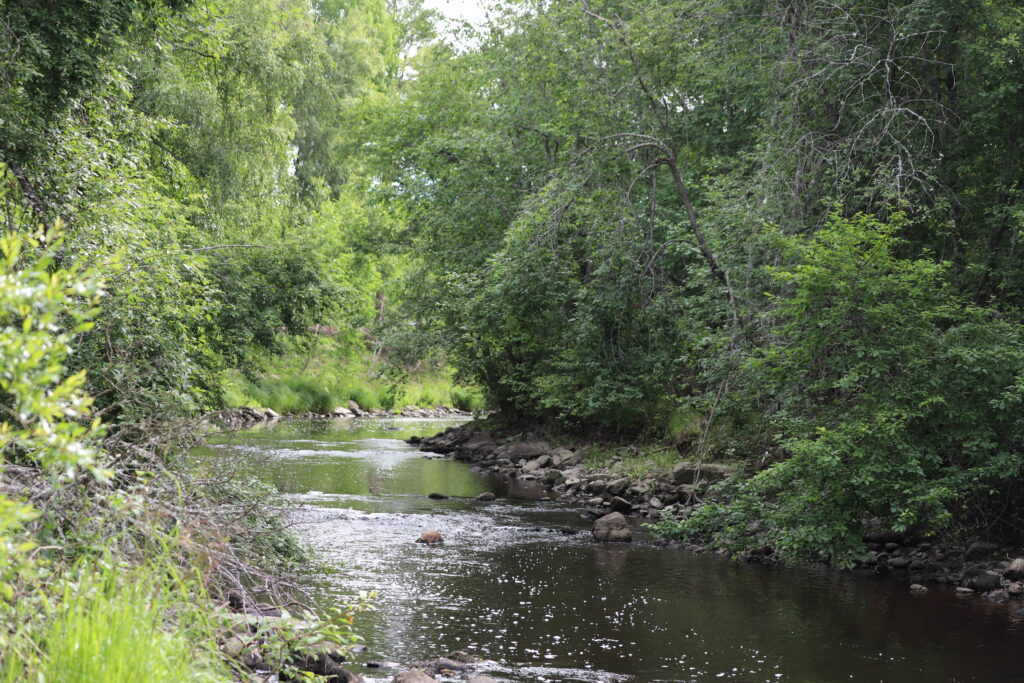
Finlands goal: becoming a climate-neutral country
In Finland, more than 75 per cent of the land area is covered by forest. The Finnish state owns around a third of the forest lands. This is mainly managed by the state-owned company Metsähallitus. Metsähallitus is appointed to use, manage, and protect the state’s land and water areas in a sustainable manner. (Forststyrelsen 2026a.)
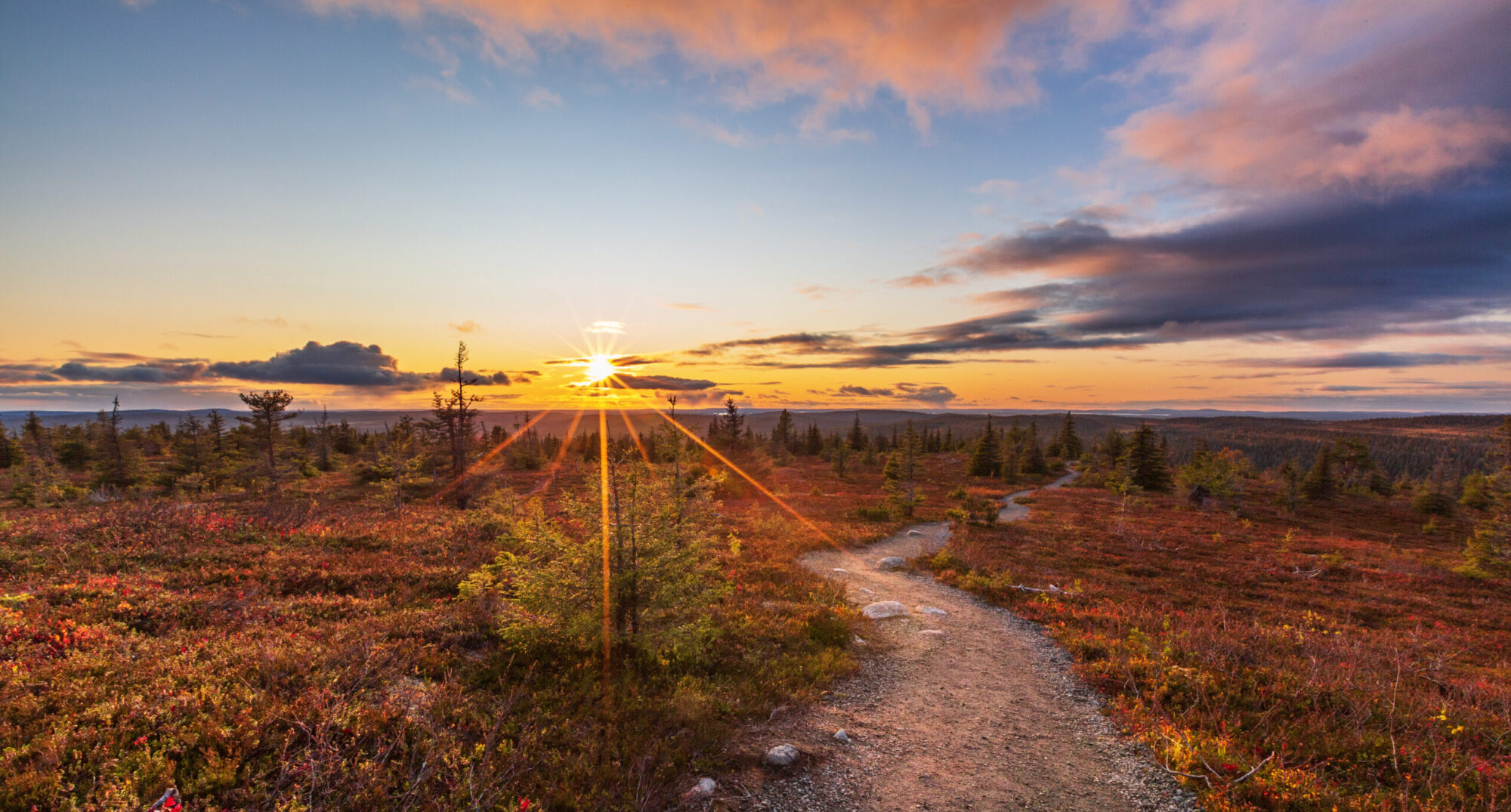
Metsähallitus plays a key role in Finland’s efforts to achieve a climate-neutral country, through the organization’s climate program. Through the program Metsähallitus helps to increase carbon sinks and safeguard biodiversity. Metsähallitus carries out a great deal of work within nature conservation and restoration in nature reserves in their work with safeguarding biodiversity (Forststyrelsen 2026b). It was in the restoration and conservation work that my colleague and I mainly took part as working pairs during our professional development period (fieldworkers at Metsähallitus tend to work in pairs mainly because of safety reasons).
Nature as a source for health and wellbeing
In addition to the work with nature conservation, it is also acknowledged at Metsähallitus that nature is a multifaceted source for health and wellbeing. Metsähallitus promotes the health benefits of spending time in nature trough providing services such as trails, rest areas, signposts, maps and information about Finland’s finest natural sites. (https://www.metsa.fi/sv/forststyrelsen/)
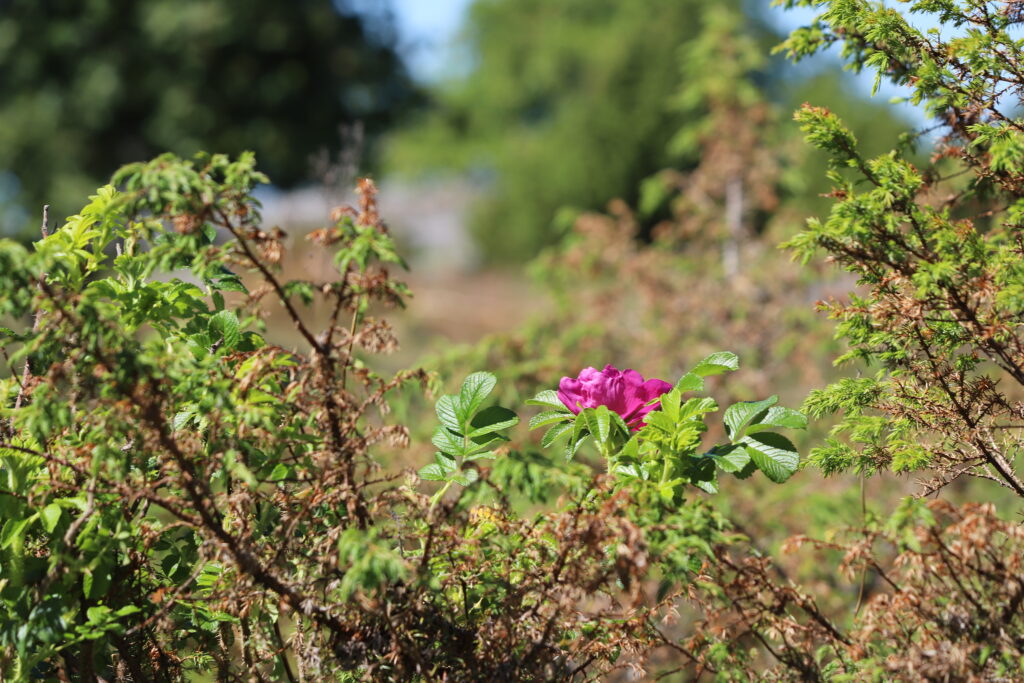
The fundamental explanation for why we recharge in nature lies in the origins of our species (Ottosson, Ottosson and Magnusson 2020). But if we set aside for a moment the basic idea that we feel good in nature because of our species’ origins, there is a constantly growing body of empirical evidence showing that there is a link between spending time in nature and the benefits it has on mental, physiological, and social health. Spending time in nature may have several benefits: you may be exposed to less noise and air pollution, it can have a stress-reducing effect, you are physically active when you go out into nature, it may strengthen social connections if you go out into nature with someone else, and research has also shown that spending time in nature strengthens the immune system. (Tyrväinen, Halonen, Pasanen, Ojala, Täubel, Kivelä, Leskelä, Pennanen, Manninen, Sinkkonen, Haahtela, Haveri, Grotenfelt-Enegren, Lankia and Neuvonen 2024; Bauer, Dayamba, Feng, Morand, Payyappallimana, Remans, Rasolofoson, Shackleton, Shanley, Tyrväinen, van den Berg and van den Bosch 2023; Engström, Juuso, Liljegren, Lundmark Alfredsson, 2022; van den Bosch & Bird 2018; Olafsdottir, Cloke, Schulz, van Dyck, Eysteinsson, Thorleifsdottir and Vögele 2020; FAO 2020.)
According to smaller research studies, nature can also boost your memory and help you overcome creative blocks and become more creative (Berman 2025). Simply put, nature is a miracle for your mind, and the good news is that you don’t need to spend a lot of time in nature for small effects. This is good news for office workers around the world, so consider spending some time in nature next time you struggle to come up with creative solutions: it might be time better spent than sitting in front of a screen.
Personal reflection on the benefits of the week spent outdoors
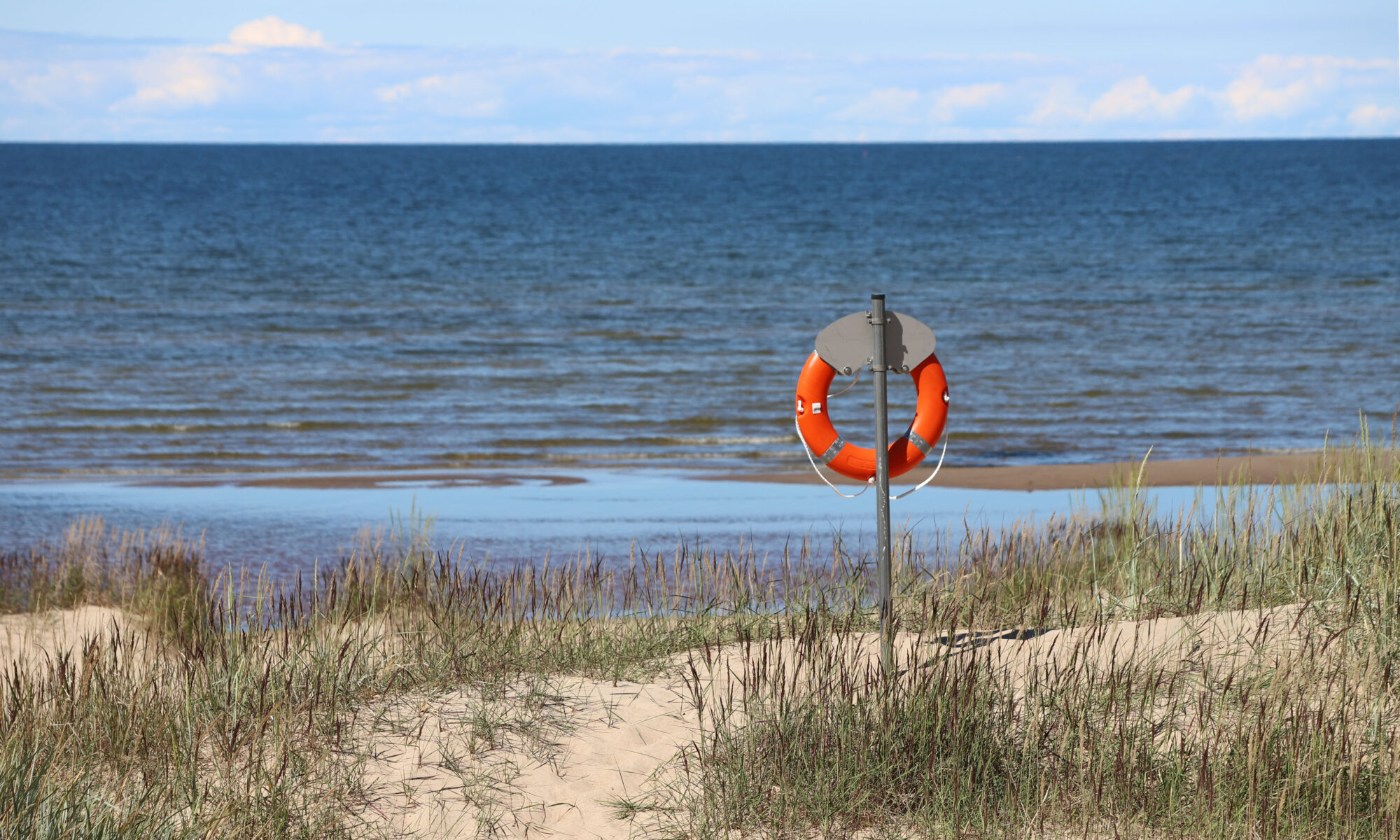
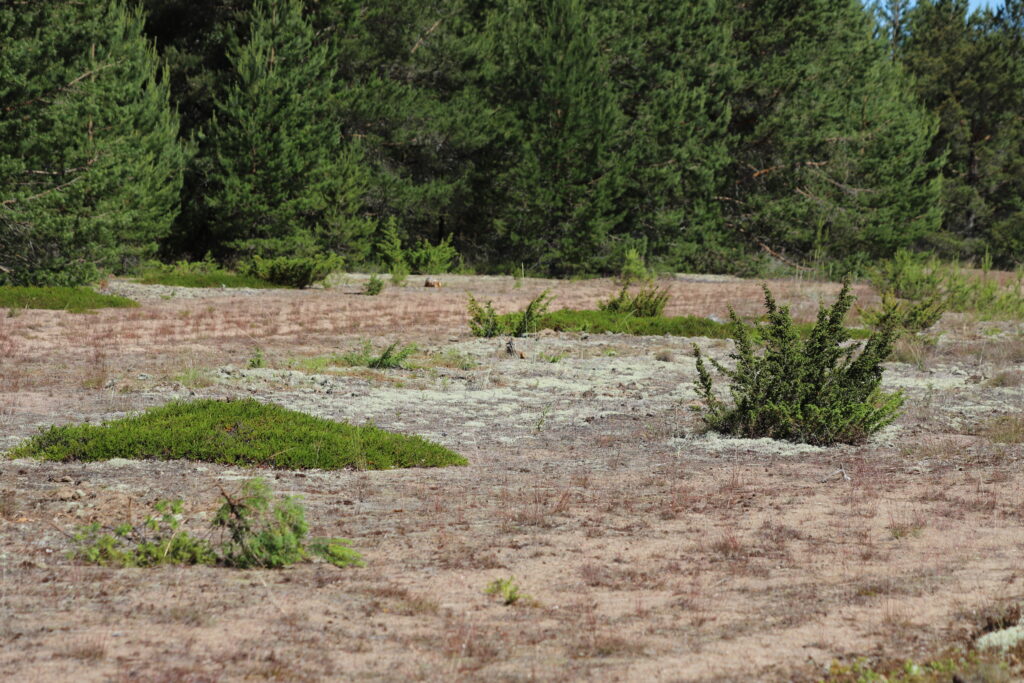
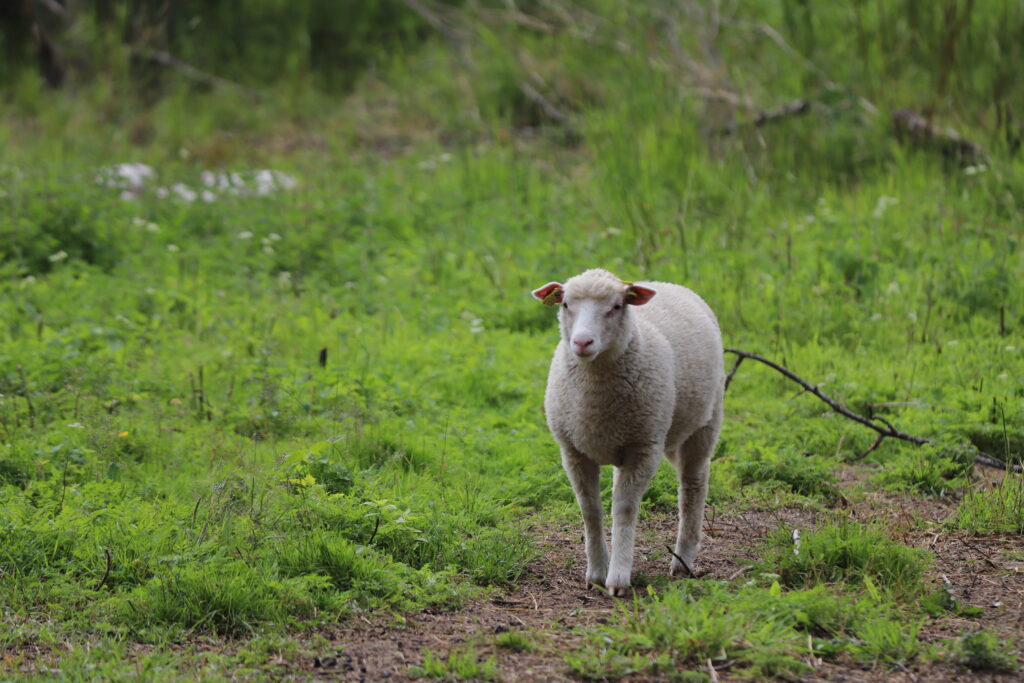
During the professional development week, we took part in Metsähallitus work with both nature conservation and restoration. We spent one day on an islet in the archipelago off Siipyy to help control wild roses (Rosa rugosa) and a couple of days at the Natura 2000 site at Storsand in Nykarleby to restore the deflation zone of the sand dunes. We also spent a couple of days cleaning up trash from a sheep pasture in a Natura 2000 area.
In contrast to an ordinary office week, we spent about 7.5–8.5 hours outside every day during the week. We were appointed very practical and clearly defined tasks in the field and this break from the everyday office gave rise to many discussions, thoughts, and questions about sustainability, biodiversity, ecosystem services, and humanity.
After a week of physical work outdoors without screen, I personally noticed that it felt like my brain was working better: I suddenly could remember quite long sequences of numbers again, my eyes didn’t hurt anymore, and I was in high spirits after the working days even though my body was tired. And I silently wonder if this would be an option for every employers’ organization in Finland to reach the country’s climate goals: to send their staff out for a week to do good in the name of ecosystem services to make the world a better place while also improving the well-being of employees.
References
Bauer, N., Dayamba, DS., Feng, X., Morand, S., Payyappallimana, U., Remans,R., Rasolofoson, R., Shackleton, C., Shanley, P., Tyrväinen, L., van den Berg, A., van den Bosch, M. 2023. The Health and Wellbeing Effects of Forests, Trees and Green Space. In C. Konijnendijk, D. Devkota, S. Mansourian & C. Wildburger (eds.) Forests and Trees for Human Health: Pathways, Impacts, Challenges and Response Options: A Global Assessment Report. Vienna: International Union of Forest Research Organizations. IUFRO World Series Vol. 41, 78-106. Available at: https://www.iufro.org/publications/world-series-vol-41-forests-and-trees-for-human-health-pathways-impacts-challenges-and-response-options. Accessed 18 August 2026.
Berman, M.G. 2025. Nature and the mind. The science of how nature improves brain, body and community. London: Ebury Publishing.
Engström, Å., Juuso, P., Liljegren, M. & Lundmark Alfredsson, L. 2022. Vård, omsorg och rehabilitering utomhus: Teori, praktik och nya perspektiv. Lund: Studentlitteratur.
FAO. 2020. Forests for human health and well-being – Strengthening the forest–health–nutrition nexus. Rome: Food and Agriculture Organization of the United Nations. Forestry Working Paper No. 18. Available at: https://doi.org/10.4060/cb1468en. Accessed 18 August 2026.
Forststyrelsen. 2026a. Available at: https://www.metsa.fi/sv/forststyrelsen/. Accessed 18 August 2026.
Forststyrelsen. 2026b. Samhällsansvar på Forststyrelsen. Available at:https://www.metsa.fi/sv/forststyrelsen/samhallsansvar/. Accessed 18 August 2026.
Olafsdottir, G., Cloke, P., Schulz, A., van Dyck, Z., Eysteinsson, T., Thorleifsdottir, B., Vögele, C. 2020. Health Benefits of Walking in Nature: A Randomized Controlled Study Under Conditions of Real-Life Stress. Environment and Behavior 52, 248–274.
Ottosson, Å., Ottosson, M. & Magnusson, R. 2020. Närmare naturen. Vetenskap och vetskap om varför vi mår bra därute. Stockholm: Bonnier Fakta.
Tyrväinen, L., Halonen, J.I., Pasanen, T., Ojala, A., Täubel, M., Kivelä, S., Leskelä, A.-R., Pennanen, P., Manninen, J., Sinkkonen, A., Haahtela, T., Haveri, H., Grotenfelt-Enegren, M., Lankia, T. & Neuvonen, M. 2024. Luontoympäristön terveysvaikutukset ja niiden taloudellinen merkitys. Helsinki: Luonnonvarakeskus. Luonnonvara- ja biotalouden tutkimus 76/2024. Available at: https://urn.fi/URN:ISBN:978-952-380-963-5. Accessed 18 August 2026.
van den Bosch, M., Bird, W. 2018. Oxford Textbook of Nature and Public Health. Oxford: Oxford University Press.
Williams, K.J.H., Lee, K.E., Hartig, T., Sargent, L.D. Williams, N.S.G., Johnson, K.A. 2018. Conceptualising creativity benefits of nature experience: Attention restoration and mind wandering as complementary processes. Journal of Environmental Psychology, 59, 36-45. Available at: https://doi.org/10.1016/j.jenvp.2018.08.005. Accessed 18 August 2026.
Maria Hofman-Bergholm
RDI Expert
Centria University of Applied Sciences
p. 040 356 3305