
Maria Hofman-Bergholm
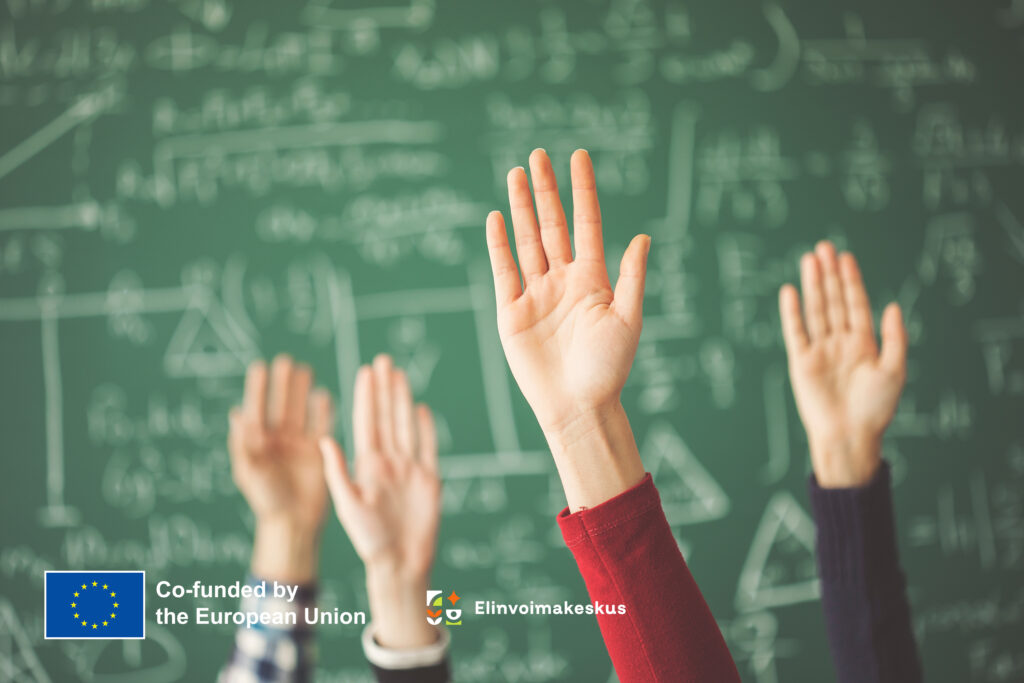
Young people’s confidence in the future and youth´s well-being has been widely debated throughout 2026. There are national surveys suggesting that young people are not doing particularly well regarding stress and mental health, and that their confidence in the future is wavering. Young people need a sense of belonging, appreciation and encouragement. Perhaps this is something we sometimes forget.
Students long for social connections in an uncertain world
During Pedaforum 2025, a two-day educational forum held at Metropolia UAS in Helsinki, many of the parallel sessions and keynote presentations highlighted the need for teachers in higher education to engage students in conversation, acknowledge them and talk with them. The message was clear: students long for social connections and the sense of belonging that teachers can help foster.
Today’s students need help to develop mental resilience and hope for the future in a constant uncertain world as the Nuorisobarometri 2025 (Laine & Happonen 2026) revealed that the proportion of young people who take a pessimistic view of the world’s future had almost doubled since 2021. Life satisfaction among respondents had also declined since 2024. According to the Nuorisobarometri 2025, three factors cause considerable uncertainty and insecurity among more than half of the respondents: the global political situation, the prevailing values and attitudes in society, and the prospects of finding a job. On top of this, studying was also associated with many different kinds of pressure. (Laine & Happonen 2026.)
This is where lecturers at universities of applied sciences and universities need to step in; the students might need help to identify and recognize their own strengths and abilities. This is something we have been working with at Centria, at least through the AIMlearning project, a project co-funded by the European Union. The project has arranged workshops and developed material for the project participants, to help the project participants identify and recognize their own strengths and learn about future skills. Unfortunately, the project is drawing to a close, whilst statistics suggest that it is perhaps precisely these kinds of courses that today’s young adults may need.

Finland’s demographic structure is changing – the future of society is dependent on the young generation
Finland’s demographic structure is changing, making today’s students more important than ever (Golovina, Nitsche, Berg, Miettinen, Rotkirch & Jokela 2024). As younger age groups continue to shrink, the wellbeing, participation and success of every young person becomes increasingly significant for society. There are now forces within society that suggest that young people’s wellbeing, participation, educational opportunities and access to employment should not be viewed merely as youth policy issues, but as a matter that will shape Finland’s future development (Kommunförbundet 2026).
While unemployment in Finland is quite high, and especially youth unemployment or unemployment after finishing university studies (Nummenmaa 2025), employers in several sectors report difficulties finding people with suitable skills because of the shrinking age cohorts (Finnish Government 2023). This can be linked to the results from both Nuorisobarometri 2025 (Laine & Happonen 2026) and 2026 Den svenskspråkiga ungdomsbarometern (Markelin, Salovaara & Majander 2026), which both reveal that the youths are particularly worried about how they can find a job in the future.
This apparent mismatch between education and labor market needs highlights the important role of higher education institutions. Beyond providing academic knowledge or knowledge for a profession, teachers should help students recognize their strengths, build confidence and develop future-oriented competencies needed to navigate an increasingly uncertain world. Equally important is fostering a sense of belonging and encouragement without adding to the pressure many students already experience.
However, providing this type of support cannot be taken for granted. Investing in pedagogical approaches and staff training that equip the teachers to identify students’ strengths, nurture resilience and promote hope for the future may therefore be one of the most important investments universities and universities of applied sciences can make for the future. After all, the future of society depends not only on what young people know, but also on whether they believe in themselves and their ability to contribute.
Centria’s project “AIMlearning” runs from February 2024 to April 2027 and is co-funded by the European Union, with additional funding from the City of Kokkola. The project is carried out jointly by Centria University of Applied Sciences and the Federation of Education in Central Ostrobothnia (Kpedu). Funding for the project has been granted by the Economic Development Centre.
References
Finnish Government, Arbets- och Näringsministeriet. 2023. Arbetskraftsbarometern: största delen av Finland lider av matchningsproblem. Available at: https://valtioneuvosto.fi/en/-/1410877/labour-force-barometer-most-of-finland-suffers-from-labour-market-mismatch?languageId=sv_SE. Accessed 16th November 2026.
Golovina, K., Nitsche, N., Berg, V., Miettinen, A., Rotkirch, A. & Jokela, M. 2024. Birth cohort changes in fertility ideals: evidence from repeated cross-sectional surveys in Finland. European Sociological Review, 40 (2), 326–341. Available at: https://doi.org/10.1093/esr/jcad048. Accessed 16th November 2026.
Kommunförbundet. 2026. Ungdomsbarometern: Varje ung person allt viktigare när Finlands befolkningsstruktur förändras. Available at: https://www.kommunforbundet.fi/pressmeddelande/2026/ungdomsbarometern-varje-ung-person-allt-viktigare-nar-finlands. Accessed 16th November 2026.
Laine, S. & Happonen, K. (toim.) 2026. Ihan paineissa. Nuorisobarometri 2025. Helsinki: Nuorisotutkimusseura. Available at: https://doi.org/10.57049/nts.1883. Accessed 16th November 2026.
Markelin, L., Salovaara, V. & Majander, M. 2026. 2026 Den svenskspråkiga ungdomsbarometern. Helsingfors: Magma. Available at: https://magma.fi/wp-content/uploads/2026/11/Ungdomsbarometern_2026.pdf. Accessed 16th November 2026.
Nummenmaa, M. 2025. Rekordmånga högutbildade är utan jobb just nu. Svenska Yle. Available at: https://yle.fi/a/7-10071794. Accessed 16th November 2026.
Maria Hofman-Bergholm
RDI expert
Centria University of Applied Sciences
p. 040 356 3305